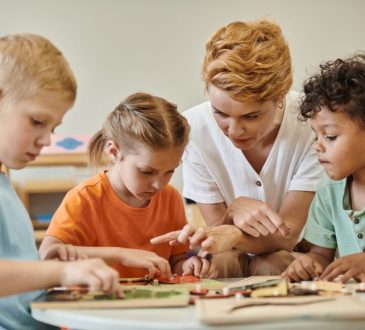
The Timeless Power of Education: Nurturing Minds, Shaping Societies

Introduction: Education Beyond the Classroom
Education is often reduced to a simple formula—books, classrooms, tests, and certificates. Yet, it is far more profound than a series of academic milestones. At its heart, education is the cultivation of wisdom, the transmission of culture, and the liberation of the human mind. It is the silent architect of societies, the unseen force behind innovation, and the greatest equalizer in a world riddled with inequality.
In the 21st century, the landscape of education continues to evolve at an unprecedented pace. While technology redefines how we learn, the essence of education remains unchanged—it is still about lighting a fire within, not just filling a vessel. A truly educated individual does not merely recite facts but engages with the world through a lens sharpened by knowledge, empathy, and critical thought.
The Essence of Education: More Than Knowledge Acquisition
True education is not synonymous with rote memorization or standardized testing. It is about nurturing the ability to think independently, question assumptions, and appreciate the richness of diverse perspectives. In its highest form, education fosters intellectual curiosity, emotional intelligence, and ethical responsibility.
A well-rounded education includes:
-
Intellectual Growth: The sharpening of reasoning, logic, and analytical capabilities
-
Moral Development: An understanding of values such as honesty, empathy, and integrity
-
Cultural Awareness: Exposure to diverse ideas, histories, and worldviews
-
Lifelong Learning: A mindset that embraces continuous personal and professional development
Historical Significance: A Pillar of Civilizations
From the ancient academies of Athens to the monastic schools of the Middle Ages, education has always been central to the rise of civilizations. Philosophers like Plato and Confucius viewed education as a path to virtue and societal harmony. In Renaissance Europe, the revival of classical learning sparked an intellectual awakening that reshaped the arts, sciences, and governance.
In every epoch, societies that invested in education reaped dividends in prosperity, stability, and cultural richness. The Enlightenment, for instance, was fueled by the spread of literacy and the belief in rational inquiry—a testament to how transformative education can be.
Modern Education: Challenges and Opportunities
Today’s educational systems face a complex array of challenges—inequality, outdated curricula, teacher shortages, and the digital divide, to name a few. Despite technological advancements, millions of children around the world still lack access to basic education, and quality varies dramatically even within developed nations.
However, the modern era also offers unprecedented opportunities:
-
Digital Learning Platforms: Allow learners to access world-class education regardless of location
-
Interdisciplinary Curricula: Encourage holistic thinking by blending the arts, sciences, and humanities
-
Global Collaboration: Connect students and educators across borders, fostering international understanding
-
Personalized Education: Adaptive technologies that cater to individual learning styles and needs
While these innovations are promising, they must be implemented with care and equity in mind. Technology alone cannot replace the human connection that makes education meaningful.
The Role of Teachers: Architects of the Future
At the core of every thriving educational system stands the teacher—a mentor, guide, and role model. Great teachers do more than convey knowledge; they inspire, challenge, and shape character. Their influence often extends far beyond the classroom, igniting passions and opening doors students never imagined.
Supporting teachers through fair compensation, ongoing training, and institutional respect is not merely a policy choice—it is a moral imperative. In valuing educators, we affirm our belief in the transformative power of learning.
Lifelong Learning: The New Educational Paradigm
In an era marked by rapid technological and social change, the idea of education as a finite phase of life is obsolete. The modern professional must be a lifelong learner, constantly adapting to new information, tools, and paradigms.
Lifelong learning is not confined to formal education. It includes:
-
Professional Development: Courses, certifications, and workshops tailored to evolving industries
-
Personal Enrichment: Reading, travel, and hobbies that broaden understanding and creativity
-
Civic Engagement: Participating in community initiatives and public discourse with informed perspectives
This culture of continuous learning empowers individuals to remain agile and relevant, regardless of age or career stage.
Education and Social Equity: A Catalyst for Change
Perhaps the most profound aspect of education is its potential to break cycles of poverty and injustice. Access to quality education equips individuals with the tools to improve their lives, advocate for their rights, and contribute meaningfully to society.
Education promotes:
-
Gender Equality: Empowering women and girls through education improves health, economic, and social outcomes for entire communities
-
Economic Mobility: Skills and knowledge open pathways to better employment and entrepreneurship
-
Civic Participation: Educated citizens are more likely to vote, volunteer, and engage in democratic processes
Investing in education, especially for marginalized groups, is one of the most effective ways to build fairer, more inclusive societies.
The Future of Education: Vision and Responsibility
Looking ahead, education must be reimagined to meet the needs of a complex, interconnected world. This means embracing innovation while holding fast to the timeless values of inquiry, compassion, and shared humanity.
Future-ready education should:
-
Emphasize Critical Thinking: Preparing students to navigate misinformation and complex moral questions
-
Foster Creativity: Encouraging experimentation, imagination, and original thought
-
Promote Emotional Resilience: Supporting mental health and self-awareness in a high-pressure world
-
Instill Global Citizenship: Teaching students to see themselves as part of a broader human family
These are not just pedagogical goals—they are societal necessities.
Conclusion: The Light That Never Fades
Education is not merely preparation for life; it is life. It is the thread that connects generations, the mirror through which we see ourselves more clearly, and the bridge to a better future. In nurturing minds, we nurture the spirit of humanity itself.
As we look to the future, we must reaffirm our commitment to making education not just a privilege for the few, but a universal right and a shared responsibility. Only then can we build a world where knowledge uplifts, wisdom guides, and learning never ends.