Selecting the right flooring material requires a careful balance between visual appeal, household demands, and long-term financial investment. Among modern choices, luxury vinyl plank flooring has rapidly become one of the most popular options for residential and commercial spaces alike. By mimicking the organic warmth of hardwood or the clean look of natural stone without demanding intense maintenance, it solves many traditional design challenges.
Navigating the vast selection of luxury vinyl plank products involves understanding technical specifications, core structures, and stylistic variations. This guide provides the critical details needed to make an informed purchasing decision tailored to your lifestyle.
Anatomy of Luxury Vinyl Plank Flooring
Luxury vinyl planking is built through a multi-layered manufacturing process designed to maximize durability and visual authenticity. Recognizing what lies beneath the surface helps explain why certain products perform better under stress.
-
The Wear Layer: Positioned at the very top, this clear protective coating shields the floor from scratches, scuffs, and daily stains. Its thickness dictates how well the floor resists heavy traffic.
-
The Print Film: This high-resolution photographic layer gives the plank its realistic appearance, replicating wood grains, knots, or stone textures.
-
The Core Layer: Providing structural integrity, the core determines whether the plank is flexible or rigid. Rigid core options resist indentation and bridge minor subfloor imperfections.
-
The Backing Layer: The foundational bottom layer that provides sound dampening, moisture resistance, and added underfoot stability.
Decoding Wear Layers and Thickness
Two specifications frequently confuse buyers: total plank thickness and wear layer thickness. While they sound similar, they serve entirely different functions.
Total thickness refers to the overall height of the plank measured in millimeters, which impacts underfoot comfort and sound absorption. However, wear layer thickness is measured in mils and represents the true shield protecting the design layer. For low-traffic areas like guest bedrooms, a 6 to 12 mil wear layer is usually sufficient. Busy hallways, kitchens, and homes with pets or children require a robust wear layer of 20 mils or higher to prevent premature scratching and surface wear.
Rigid Core Options: WPC Versus SPC
When shopping for luxury vinyl plank flooring, you will encounter two primary core compositions: Wood Plastic Composite and Stone Plastic Composite. Each offers unique mechanical advantages.
WPC cores incorporate wood fiber or recycled plastic composites mixed with foaming agents, creating a softer, warmer, and more cushioned feel underfoot. This composition makes WPC an exceptional choice for living areas and bedrooms where comfort during prolonged standing is valued.
SPC cores utilize a dense limestone and plastic powder mixture, resulting in an exceptionally rigid, impact-resistant board. SPC resists temperature fluctuations and heavy rolling loads with ease, making it ideal for sunrooms, commercial properties, and kitchens that undergo heavy daily use.
Understanding Installation Methods
Luxury vinyl plank is celebrated for offering versatile installation methods that accommodate various skill levels and subfloor conditions.
-
Click-Lock Floating Floors: Planks lock together edge-to-edge, floating above the subfloor without requiring glue or nails. This method is fast, clean, and allows the floor to expand and contract naturally with ambient temperature changes.
-
Glue-Down Planks: Secured directly to a meticulously prepared subfloor using professional adhesive, this method prevents shifting and is preferred for large open-concept commercial or residential spaces.
-
Loose Lay Planks: Featuring a high-friction rubber backing, these heavy planks stay in place through sheer weight and friction, making damaged individual planks effortless to lift and replace.
Design Trends and Aesthetic Choices
Modern manufacturing techniques have evolved far beyond basic synthetic wood looks. Innovations such as embossed-in-register technology precisely align surface textures with the printed visual grain beneath, creating a tactile finish that mimics genuine timber.
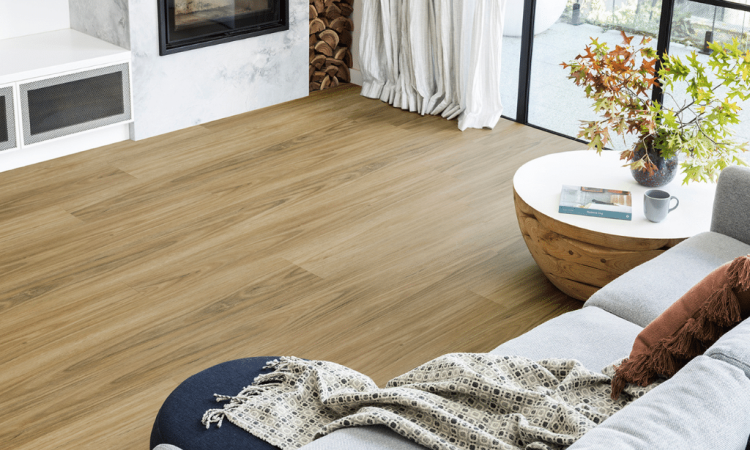
Design palettes have also shifted significantly. Cool gray tones have given way to warm, organic wood hues including honeyed oak, rich caramel, and soft taupe. Furthermore, wide-plank formats and patterned layouts like herringbone continue to gain popularity because they create a seamless sense of space and movement across contemporary interiors.
Frequently Asked Questions
Can luxury vinyl plank flooring be installed over radiant heating systems?
Yes, most luxury vinyl plank products are compatible with low-temperature hydronic or electric radiant subfloor systems. Installers must ensure the maximum surface temperature does not exceed manufacturer recommendations, and total assembly thickness should remain optimized to allow proper heat transfer.
Is luxury vinyl plank completely waterproof or merely water-resistant?
High-quality luxury vinyl plank flooring features a 100 percent waterproof core and tight locking mechanisms, meaning standing water on the surface will not damage the planks. However, excessive moisture can still seep underneath the perimeter if subfloors lack proper moisture barriers.
Does luxury vinyl flooring require an extra underlayment pad?
Many premium luxury vinyl planks feature a pre-attached acoustic underlayment on the bottom. If the product lacks an attached backing, a thin, moisture-resistant underlayment designed specifically for vinyl must be laid down to ensure proper sound dampening and cushion.
How should luxury vinyl plank flooring be cleaned on a daily basis?
Routine care requires dry sweeping or vacuuming with a soft bristle attachment to remove abrasive grit. For deeper cleaning, use a damp mop with a pH-neutral cleaner formulated for vinyl floors, avoiding harsh detergents, steam mops, or abrasive scouring pads.
Can luxury vinyl planks be installed outdoors on an open patio?
Standard luxury vinyl plank is engineered for indoor climate-controlled environments. Extreme outdoor temperature swings and direct ultraviolet radiation can cause dimensional warping, fading, and adhesive failure if exposed to unconditioned exterior weather conditions.
How do you repair a gouged or heavily damaged individual plank?
For loose lay or click-lock floors, damaged planks can be uninstalled from the edge or carefully cut out from the center. A replacement plank is then trimmed, fitted, and locked or glued into position, restoring the floor without replacing the entire room.
Does luxury vinyl flooring emit volatile organic compounds?
Reputable manufacturers produce luxury vinyl flooring that meets strict indoor air quality standards and holds certifications verifying low chemical emissions. Always check product specifications for indoor air certifications to ensure a safe home environment.